When a business wants more customers online, one of the first questions is often:
Should we invest in SEO or paid advertising?
Both can put your business in front of people who are actively looking for your products or services. Both can generate website traffic, enquiries and sales. But they work differently, require different types of investment and can play very different roles in your overall marketing strategy.
SEO focuses on building organic visibility over time. Paid advertising allows you to pay for immediate exposure across platforms such as Google, Microsoft, Meta and other advertising networks.
So which should come first?
The answer depends on your objectives, budget, competitive landscape, website, timeframe and how quickly you need to generate opportunities.
Rather than treating SEO and paid ads as competing strategies, it is more useful to understand what each does well, where the limitations are and how they can work together.
What Is SEO?
Search Engine Optimisation, or SEO, is the process of improving your website and online presence so that your pages have a better opportunity to appear when people search for relevant information, products or services.
SEO can involve several areas, including:
- Keyword and search intent research
- Website structure
- Technical SEO
- On-page optimisation
- Content creation
- Internal linking
- Local SEO
- Website performance
- Authority and reputation signals
- Ongoing analysis and improvement
For example, imagine you run an accounting firm.
Someone searches:
“small business accountant near me”
or:
“tax accountant for small business”
SEO aims to make relevant pages on your website more visible for searches like these.
Our Search Engine Optimisation approach focuses on connecting search visibility with the wider website experience rather than simply chasing rankings.
Because getting found is only useful if the people who arrive are relevant to your business.
What Are Paid Ads?
Paid advertising allows businesses to purchase visibility across search engines, social platforms and other digital channels.
Google Ads is one of the most familiar examples.
A business can bid to appear when someone searches for a relevant term, such as:
“emergency plumber”
“wedding photographer”
“business insurance quote”
or:
“WordPress website designer”
Depending on the campaign type, you might pay when someone clicks your advertisement, views it, watches a video or completes another defined action.
Paid advertising isn’t limited to Google Search either.
Your strategy might include search campaigns, display advertising, remarketing, shopping campaigns, social advertising or other formats depending on your audience and objectives.
A well-planned Paid Advertising campaign gives you considerably more control over when, where and how your business is promoted.
SEO vs Paid Ads: What’s the Main Difference?
The simplest distinction is this:
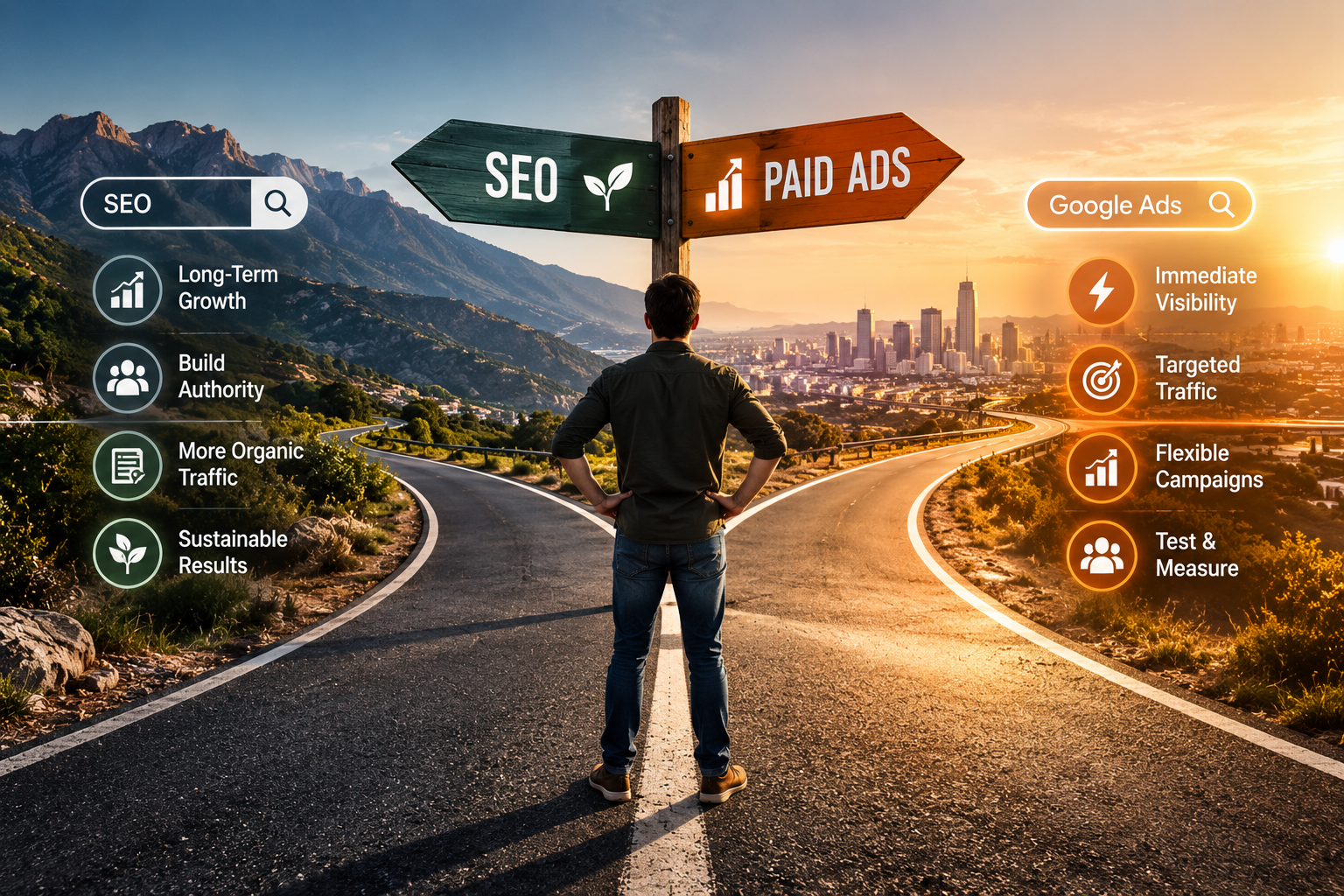
SEO aims to earn organic visibility.
Paid advertising purchases visibility.
With paid advertising, you can potentially begin appearing for relevant searches soon after a campaign is launched and approved.
SEO generally takes longer because search engines need to crawl, understand and evaluate your website while you improve its content, technical foundation and authority.
But that doesn’t mean paid advertising is automatically the short-term strategy and SEO is always the long-term answer.
Both require ongoing management.
SEO doesn’t become “finished” once you reach a strong position, and advertising doesn’t automatically generate profitable leads simply because you’re willing to pay for clicks.
The quality of the strategy matters.
1. How Quickly Do You Need Results?
Timeframe is one of the biggest considerations when deciding where to invest.
If you’ve just launched a service and need to begin generating traffic quickly, paid advertising may give you an opportunity to reach relevant audiences sooner.
You can create a campaign, choose targeting, write advertisements and direct visitors to a relevant landing page.
SEO usually requires more patience.
A new website may need time to establish visibility, while an existing website may require technical improvements, new content and stronger service pages before meaningful organic growth occurs.
However, be cautious with the phrase “instant results” when discussing paid advertising.
Advertising can generate traffic quickly.
It does not guarantee customers quickly.
The campaign still needs effective targeting, strong messaging, a good landing page and accurate conversion tracking.
2. How Competitive Is Your Market?
Competition affects both SEO and paid advertising.
In organic search, you may be competing against businesses that have spent years developing strong websites, publishing useful content and building authority.
Ranking alongside established competitors can therefore require significant work.
Paid search can provide another route into those results, but competitive markets often have higher click costs.
That means you need to understand the economics.
If a click costs $20 and only one visitor in every 100 becomes a customer, the numbers may not work for a low-value product.
For a high-value professional service, the same cost might be perfectly reasonable.
The question isn’t simply:
“How expensive are the clicks?”
It is:
“What does it cost us to generate a qualified lead or customer?”
That is a much more useful measurement.
3. What Is Your Marketing Budget?
Budget matters, but not always in the way businesses expect.
Paid advertising usually has two direct components:
Advertising spend + campaign management
If you stop funding the advertising platform, the paid traffic generally stops too.
SEO works differently.
You’re investing in improvements to your website, content, technical performance and organic presence.
Those improvements can continue providing value after the initial work has been completed, although SEO still requires monitoring and ongoing improvement.
This sometimes leads to the claim that SEO is “free traffic”.
It isn’t.
Effective SEO requires time, expertise, content, development and ongoing analysis.
The difference is primarily where the investment goes and how the resulting visibility is generated.
4. Is Your Website Ready to Convert Visitors?
This is one of the most overlooked questions.
Imagine spending thousands on Google Ads and sending visitors to a website that:
Loads slowly.
Looks poor on mobile.
Doesn’t clearly explain the service.
Has no visible call to action.
Provides little evidence of credibility.
Uses a complicated enquiry form.
The advertising campaign might successfully generate clicks, but the website can still lose potential customers.
The same applies to SEO.
Ranking first doesn’t automatically generate enquiries.
Before significantly increasing either SEO or advertising investment, make sure your Website Design supports the traffic you’re working so hard to acquire.
Your website should clearly answer:
What do you offer?
Who is it for?
Why should someone choose you?
What should they do next?
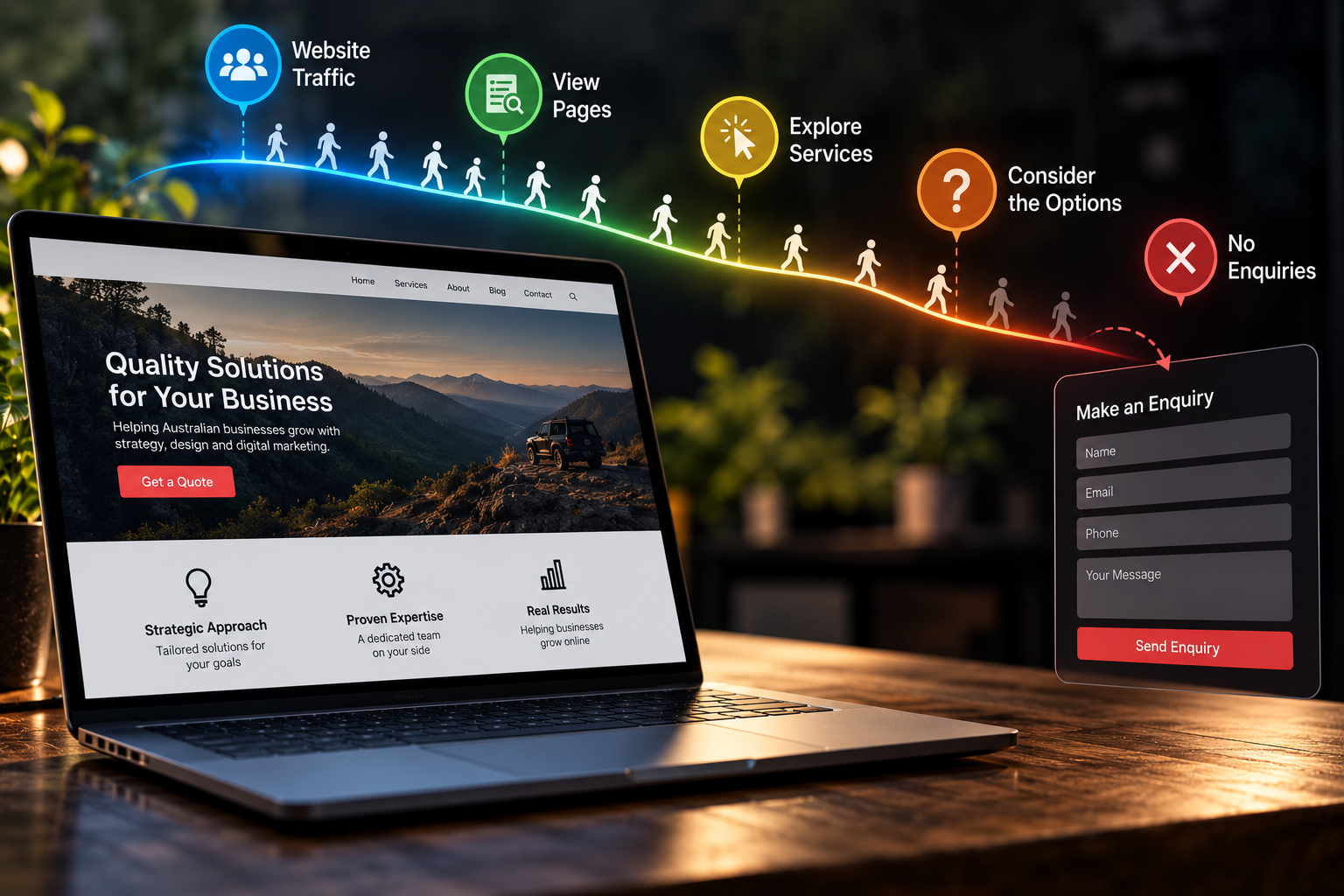
This connects directly with our earlier discussion about why websites can receive traffic without generating enquiries.
Traffic is only one stage of the journey.
5. What Are People Actually Searching For?
Search intent is important for both SEO and paid search.
Consider these two searches:
“how does SEO work?”
and:
“SEO agency for small business”
The first person may simply be researching.
The second appears to be investigating a service provider.
Both searches can have value, but they belong at different stages of the customer journey.
A good SEO strategy can target informational searches with useful articles while also optimising commercial service pages.
Paid search can often focus more aggressively on searches indicating stronger commercial intent.
Understanding these differences helps you decide where budget and effort should be allocated.
6. SEO Can Build Long-Term Search Visibility
One of SEO’s major strengths is its ability to create an expanding organic footprint.
A useful service page might appear for multiple related searches.
A well-written guide might attract visitors for months or years.
An FAQ might answer a highly specific customer question.
Internal links can connect informational content with relevant commercial pages.
Over time, these assets create a larger body of useful content around your business.
This has become even more important as search itself evolves.
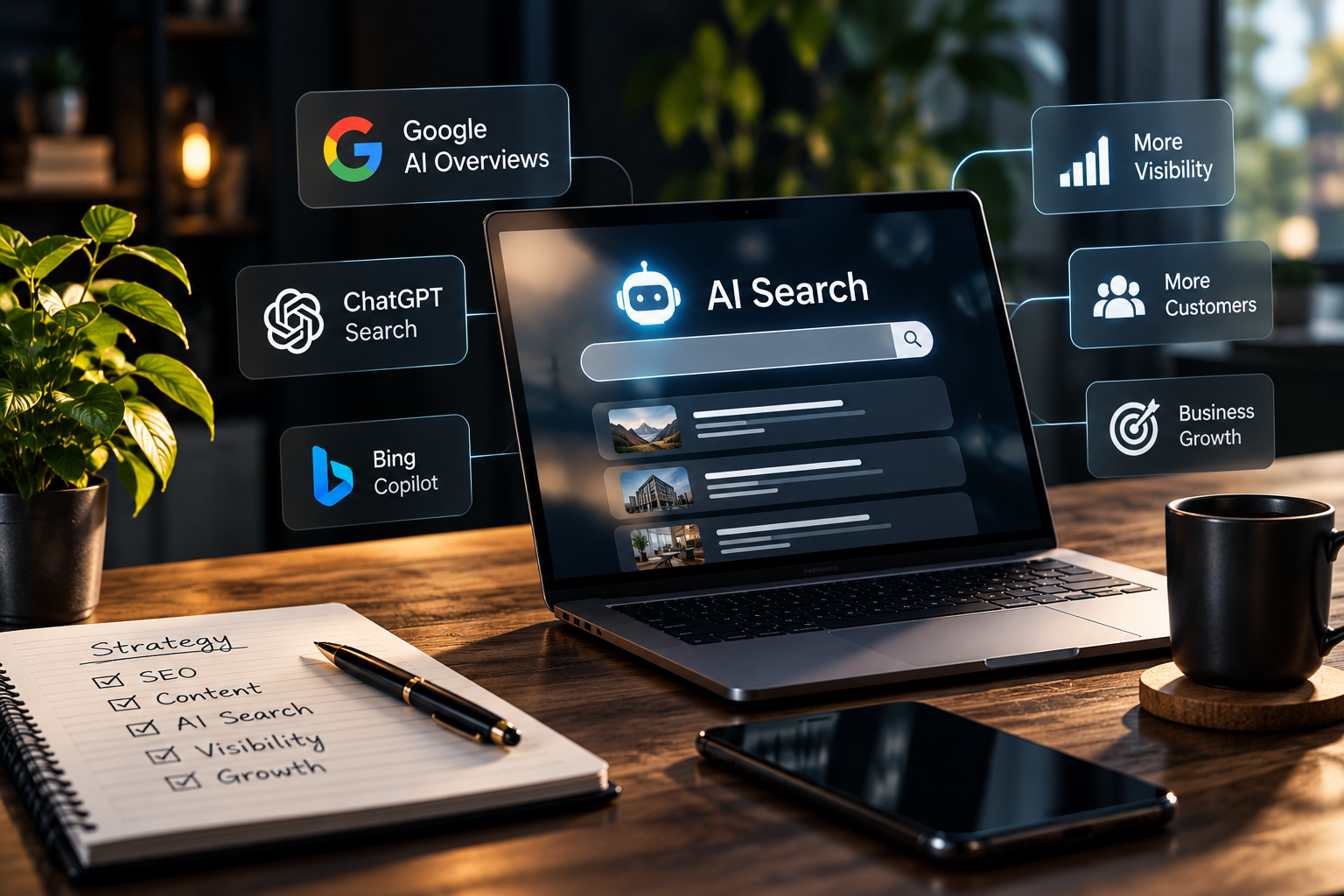
As we discussed in our article about SEO and AI search visibility, people are no longer interacting with search solely through a traditional list of blue links. AI-powered search experiences are changing how questions are asked and how information is presented.
Strong website content, technical accessibility and clear subject expertise therefore have value beyond a single keyword ranking.
7. Paid Ads Give You Greater Control
SEO can provide valuable visibility, but you can’t simply tell a search engine:
“Put this page first for this keyword tomorrow.”
Paid advertising offers more direct control.
Depending on the platform and campaign type, you can control or influence:
- Target locations
- Search terms and keywords
- Audience characteristics
- Advertising schedules
- Devices
- Campaign budgets
- Landing pages
- Promotional messages
- Remarketing audiences
This makes paid advertising particularly useful for specific campaigns.
For example, you might want to promote:
A new service.
A seasonal offer.
A particular product range.
A limited-time promotion.
A service in a particular location.
Paid advertising lets you create a campaign specifically around that objective.
8. Paid Ads Can Provide Valuable Market Data
Advertising isn’t only a traffic channel.
It can also produce useful information.
A search campaign can help reveal which search terms generate clicks, which messages attract attention, which landing pages convert and which services produce stronger leads.
That information can influence your wider Online Strategy.
For example, suppose you advertise three services.
Service A generates plenty of clicks but almost no enquiries.
Service B receives fewer clicks but produces high-quality leads.
Service C receives strong engagement but visitors repeatedly abandon the landing page.
Each outcome tells you something different.
You may need to change targeting for Service A, increase investment in Service B and improve the landing page for Service C.
That intelligence can also influence SEO priorities.
9. SEO Can Reach Customers Throughout the Research Journey
Paid search campaigns often focus heavily on commercial searches because every click costs money.
SEO gives you more flexibility to create useful content for earlier stages of the customer journey.
For example, someone looking for a website designer might first search:
“why is my website so slow?”
Then:
“does website speed affect conversions?”
Later:
“should I redesign my website?”
And eventually:
“website design agency”
Useful SEO content allows your business to appear during multiple stages of that journey.
Not every article will generate an immediate enquiry.
Some content builds awareness and credibility before the customer is ready to act.
That’s why SEO should be connected to a broader content and digital marketing strategy rather than measured only by whether every page produces a direct lead.
10. Paid Advertising Stops When the Budget Stops
This is one of the clearest differences between the channels.
If you’re spending $3,000 per month on advertising and stop the campaign, the paid visibility generated by that campaign stops.
SEO doesn’t operate in exactly the same way.
A useful article or well-optimised service page doesn’t disappear simply because you stop paying for clicks.
However, that doesn’t mean organic visibility is permanent.
Competitors improve their websites.
Search behaviour changes.
Your content becomes outdated.
Technical issues appear.
Search systems evolve.
SEO therefore needs ongoing attention, even though you’re not paying a search engine for every organic click.
So, Should You Invest in SEO First?
SEO may deserve greater initial attention when:
- You’re building a long-term digital presence
- Customers actively search for your services
- You have useful expertise that can become strong content
- Your website needs structural or content improvements
- You want to reduce dependence on paid traffic over time
- You operate in a market where organic visibility influences trust and research
It can also make sense to address SEO fundamentals during a new website design project rather than trying to retrofit everything later.
Website architecture, page structure, URLs, internal links, performance and content planning all affect future search visibility.
When Might Paid Ads Come First?
Paid advertising may deserve priority when:
- You need to generate targeted traffic quickly
- You’re launching a new product or service
- Organic visibility is currently limited
- You have a time-sensitive campaign
- You want to test demand
- You have clear conversion tracking
- Your landing pages already perform well
- You understand what a lead or customer is worth
Paid advertising can also be useful when organic competition is extremely strong and building meaningful SEO visibility will take time.
Rather than waiting for SEO alone, paid campaigns can create visibility while organic work progresses.
When Should You Use Both?
For many businesses, the strongest question isn’t SEO or paid ads?
It’s:
How should SEO and paid advertising work together?
Consider a business launching a new website.
The SEO strategy begins by improving technical foundations, service pages and content.
At the same time, paid advertising targets commercially relevant searches and starts generating traffic.
Campaign data identifies which messages and services produce stronger enquiries.
That information helps shape landing pages and future content.
SEO visibility gradually grows.
Over time, the business has multiple ways to reach potential customers instead of relying entirely on one channel.
That’s a much more resilient digital strategy.
A Simple Way to Think About the Difference
Consider SEO as building an asset.
You improve your website, develop useful content, strengthen technical foundations and expand your organic visibility.
Consider paid advertising as buying targeted distribution.
You invest money to put a message in front of a defined audience at a particular time.
Neither description makes one inherently better than the other.
They solve different problems.
Don’t Decide Based on Traffic Alone
Whatever channel you choose, avoid judging performance only by visitor numbers.
A campaign generating 5,000 clicks isn’t necessarily better than one generating 500.
An SEO article attracting 10,000 visitors isn’t necessarily more commercially valuable than a service page attracting 500 highly relevant prospects.
Measure outcomes that matter to the business.
That might include:
- Qualified enquiries
- Bookings
- Sales
- Revenue
- Cost per lead
- Cost per acquisition
- Conversion rate
- Lead quality
- Return on advertising spend
- Customer lifetime value
Your measurement framework will depend on the business.
The important point is to connect marketing activity with meaningful outcomes.
Don’t Forget Conversion Tracking
You can’t confidently compare SEO and paid advertising if you don’t know which channels generate results.
At a minimum, businesses should consider tracking meaningful actions such as:
Completed enquiry forms
Quote requests
Online purchases
Bookings
Relevant phone enquiries
The exact setup will depend on your website and marketing platforms.
Be careful about treating every interaction as a primary conversion.
Someone clicking a Get a Quote button isn’t necessarily a lead.
Someone successfully submitting the quote form is much closer to one.
Accurate tracking helps you make better investment decisions.
What If Your Budget Is Limited?
A limited budget makes prioritisation even more important.
Trying to do everything at once can spread resources too thinly.
Start by understanding:
Where does demand already exist?
How do customers currently find you?
Which services are most commercially important?
How competitive are the relevant searches?
How strong is your website?
How quickly do you need results?
What is a new customer worth?
Then build your strategy around those answers.
For one business, that might mean fixing the website and starting with a tightly targeted paid campaign.
For another, it might mean investing primarily in SEO and content.
For another, it could mean using paid search to generate immediate opportunities while gradually building organic visibility.
There isn’t a universal allocation that works for every business.
SEO vs Paid Ads: A Quick Comparison
| Consideration | SEO | Paid Advertising |
|---|---|---|
| Visibility | Organic search | Paid placements |
| Speed | Usually develops over time | Can generate visibility quickly |
| Direct media cost | No payment per organic click | Usually involves media spend |
| Targeting control | More limited | Greater campaign-level control |
| Long-term value | Can build lasting website assets | Visibility depends on continued spend |
| Content value | Strong | Landing pages and ad creative are critical |
| Testing | Usually slower | Often faster |
| Competition | Organic competitors | Advertiser competition |
| Best suited to | Sustainable search visibility | Immediate, targeted campaigns |
| Conversion tracking | Important | Essential |
The important distinction is that neither channel guarantees results.
Execution, market demand, competition, website quality and measurement all influence performance.
Where Should Your Business Invest First?
Start with your business objective rather than the marketing channel.
If your priority is immediate targeted visibility, paid advertising may play a larger role initially.
If your priority is developing sustainable organic visibility and building a stronger search presence, SEO may deserve greater investment.
If you need both immediate opportunities and long-term growth, a coordinated combination can make sense.
But before investing heavily in either, make sure the foundations are right.
Your website needs to clearly communicate what you offer.
Your landing pages need to match visitor intent.
Your calls to action need to be obvious.
Your enquiry process needs to work.
Your conversion tracking needs to be accurate.
Otherwise, you risk spending more money simply to send more people into a journey that isn’t converting.
Build the Strategy Around the Business, Not the Channel
SEO and paid advertising are tools.
The objective isn’t to “do SEO” or “run Google Ads”.
The objective is to help the right customers find your business and give them a clear path towards taking action.
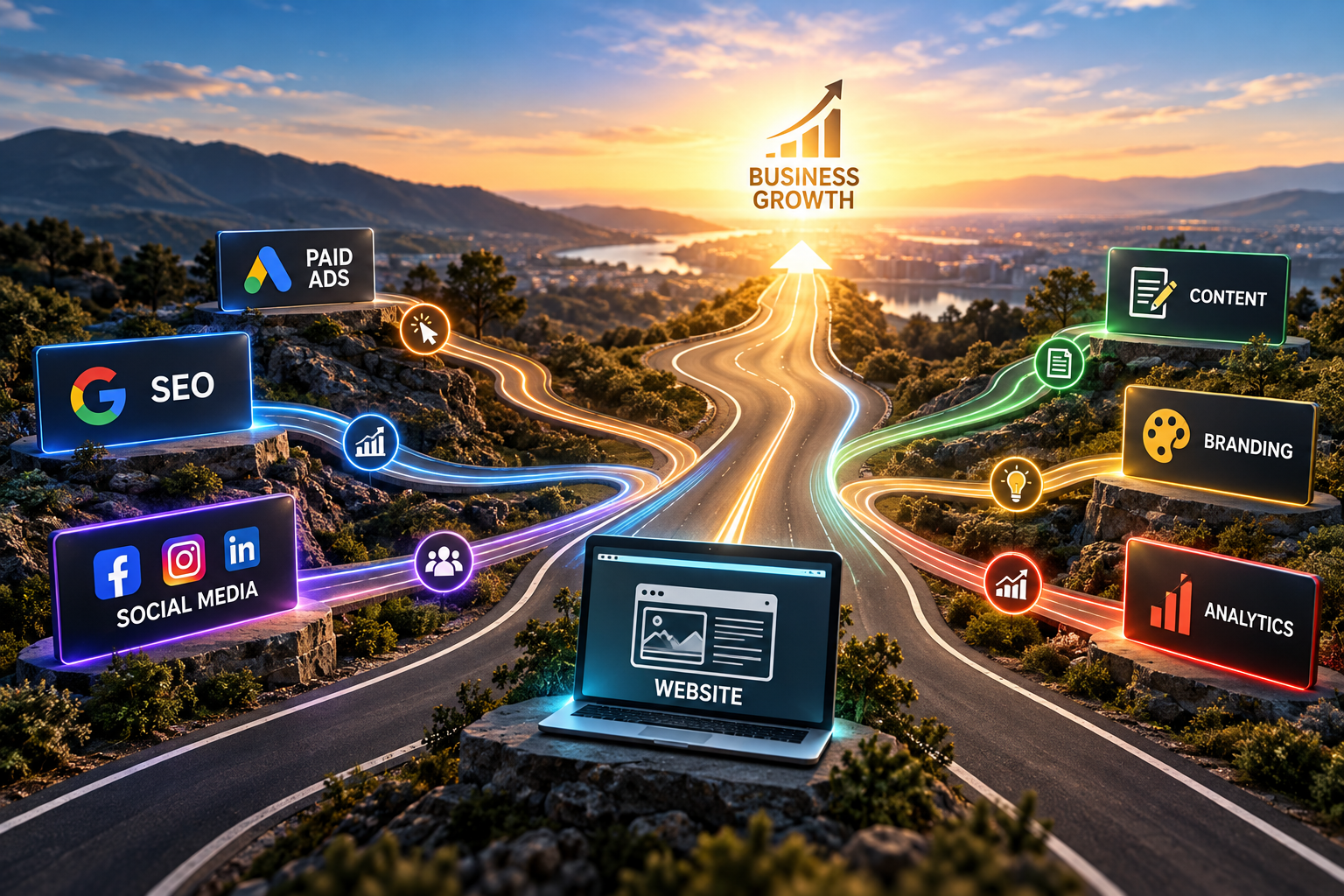
At Big Boot Media, we look at website design, SEO, paid advertising, content and online strategy as connected parts of the same digital ecosystem.
Sometimes the priority is building stronger organic visibility.
Sometimes it is generating targeted traffic quickly.
Sometimes the biggest opportunity has nothing to do with traffic at all and lies in improving the website experience or conversion process.
A good strategy identifies that before deciding where the budget should go.
If you’re unsure whether SEO, paid advertising or a combination makes the most sense for your business, get a quote and tell us what you’re trying to achieve.
Frequently Asked Questions
Is SEO better than paid advertising?
Neither is universally better. SEO is typically used to develop organic search visibility over time, while paid advertising provides greater control over immediate paid exposure. The right approach depends on your objectives, timeframe, competition, website and budget.
How long does SEO take to work?
There isn’t a fixed timeframe. Results depend on factors including your website’s current condition, competition, market, content, technical issues and existing authority. SEO should generally be viewed as an ongoing strategy rather than a short campaign with a guaranteed completion date.
How quickly can paid advertising generate leads?
Paid campaigns can begin generating traffic relatively quickly once they are configured and approved, but traffic does not guarantee leads. Targeting, advertising messages, landing-page quality, competition and conversion tracking all affect results.
Is SEO cheaper than Google Ads?
Not necessarily. SEO requires investment in strategy, content, technical improvements and ongoing optimisation. Paid advertising requires media spend as well as campaign management. Compare the channels based on business outcomes rather than simply the cost of individual clicks.
Should a small business use SEO and paid ads together?
They can complement one another well. Paid advertising can provide targeted visibility while SEO builds organic visibility over time. Whether using both makes sense depends on available budget, demand and business objectives.
What should I fix before spending more on advertising?
Make sure your website clearly communicates your offer, works properly on mobile, loads efficiently, provides strong calls to action and makes it easy to enquire or purchase. You should also have accurate conversion tracking in place before significantly increasing advertising spend.