For years, search engine optimisation followed a fairly familiar journey. Someone typed a question or keyword into Google, reviewed the search results, clicked a website and hopefully became a customer.
That journey is changing.
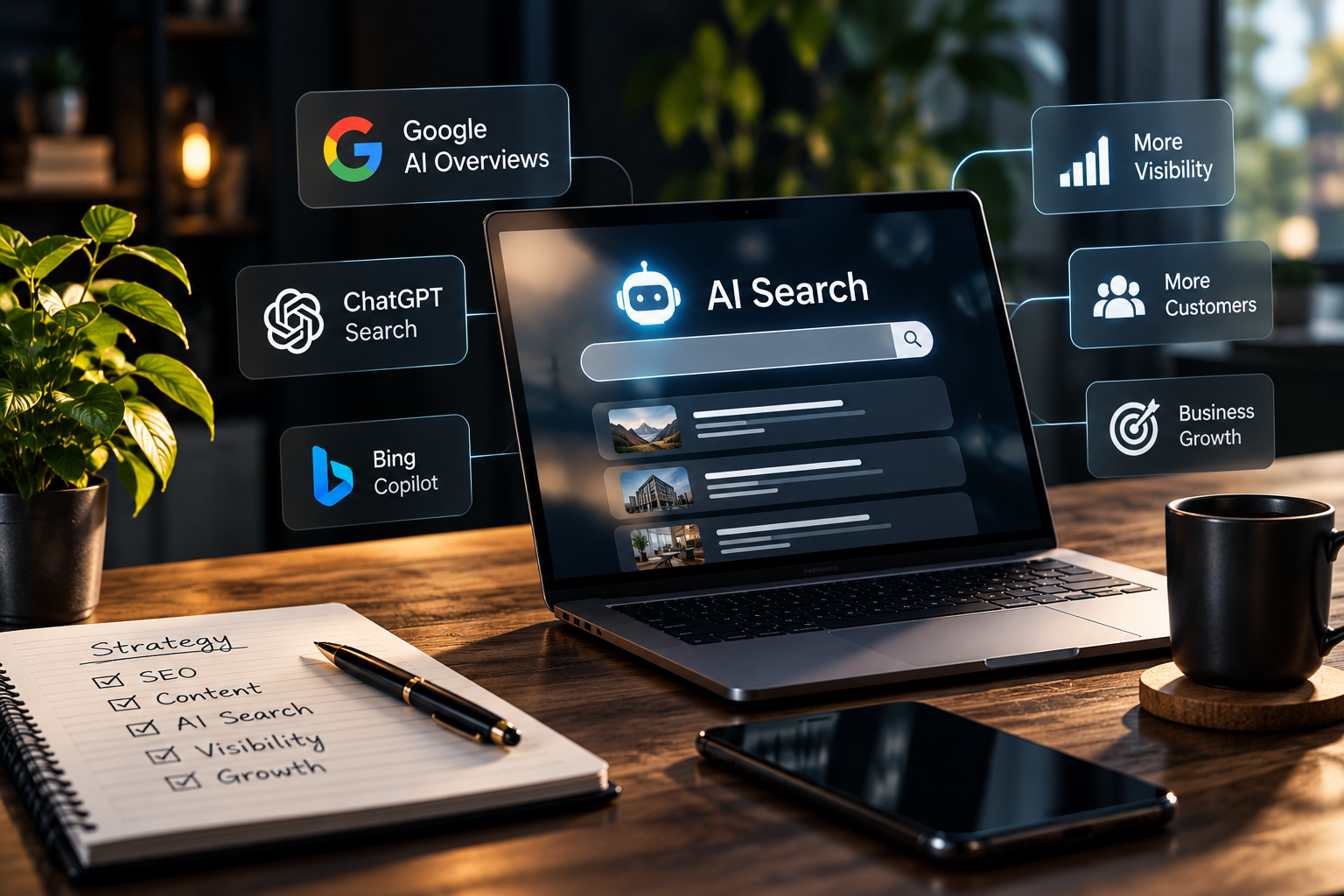
People are increasingly using AI-powered search experiences to research businesses, compare services, answer questions and narrow down their options. Google itself now incorporates generative AI through AI Overviews and AI Mode, while platforms such as Microsoft Copilot and ChatGPT can use information from across the web when responding to search-related questions. Google for Developers
For businesses, this creates an important shift in digital marketing.
Ranking well in traditional search results still matters. But your wider objective should now be to create a digital presence that search engines and AI-powered systems can easily find, understand and confidently reference.
The good news is that this does not mean throwing away everything you know about SEO.
In fact, many of the fundamentals behind good Search Engine Optimisation are becoming even more important.
Search Is Changing, but SEO Isn’t Disappearing
There has been plenty of discussion around terms such as AI SEO, Answer Engine Optimisation (AEO) and Generative Engine Optimisation (GEO).
They describe a genuine change in how people access information, but businesses should be cautious about treating AI visibility as something completely separate from SEO.
Google’s current guidance is particularly clear on this point. Its generative AI search features are built on its existing Search systems, and Google says established SEO best practices continue to apply. It does not require special AI markup, new machine-readable files or a separate schema type for appearing in AI Overviews or AI Mode. Google for Developers
Bing takes a similar position. Its webmaster guidance states that the crawling, indexing, content clarity and authority principles that support conventional search also support eligibility for AI-powered experiences such as Copilot. Search – Microsoft Bing
So the question isn’t really:
“Should we stop doing SEO and start doing AI optimisation?”
A more useful question is:
“Is our website providing clear, useful and trustworthy information wherever people search for answers?”
That distinction matters.
What Does AI Search Mean for Your Business?
Traditional search commonly presents a collection of pages for the user to investigate.
AI-powered search can go further by synthesising information and answering more complex questions directly.
A potential customer might previously have searched:
“SEO agency for small business”
Now they may ask:
“What should a small Australian business look for when choosing an SEO agency?”
Or:
“What is the best digital marketing approach for a local service business that wants more qualified leads?”
These are longer, more conversational and often more specific queries.
Google says AI Mode can handle nuanced questions, comparisons and follow-up queries, while its systems may perform multiple related searches through a process Google calls query fan-out. This allows the system to investigate different aspects of the original question and identify supporting sources. Google for Developers
That creates an opportunity for businesses whose websites answer specific customer questions exceptionally well.
1. Build Your AI Visibility on Strong SEO Foundations
Before thinking about AI, start with your website.
If search engines cannot efficiently crawl, understand and index your pages, adding more content isn’t going to solve the underlying problem.
Google requires pages to be indexed and eligible to appear with a snippet in regular Search before they can appear as supporting links within AI Overviews or AI Mode. Google for Developers
Your technical foundation should therefore include:
- Clear website architecture
- Crawlable internal links
- Logical URLs
- Appropriate page titles and meta descriptions
- Correct heading structure
- Mobile-friendly pages
- Fast loading performance
- XML sitemaps
- Canonical URLs where appropriate
- Indexable text content
- Relevant structured data
This is one reason Website Design and SEO should not be treated as completely separate activities.
A beautiful website that search engines struggle to understand has a problem. Equally, a technically optimised website that provides a poor experience for visitors isn’t doing its job.
You need both.
2. Create Content That Answers Real Customer Questions
AI search makes customer-focused content particularly important.
Instead of building articles purely around keywords such as:
“website designer”
think about the questions behind the search:
How much does a business website cost?
How long does it take to design a new website?
Should I redesign my website or improve the existing one?
What should a small business website include?
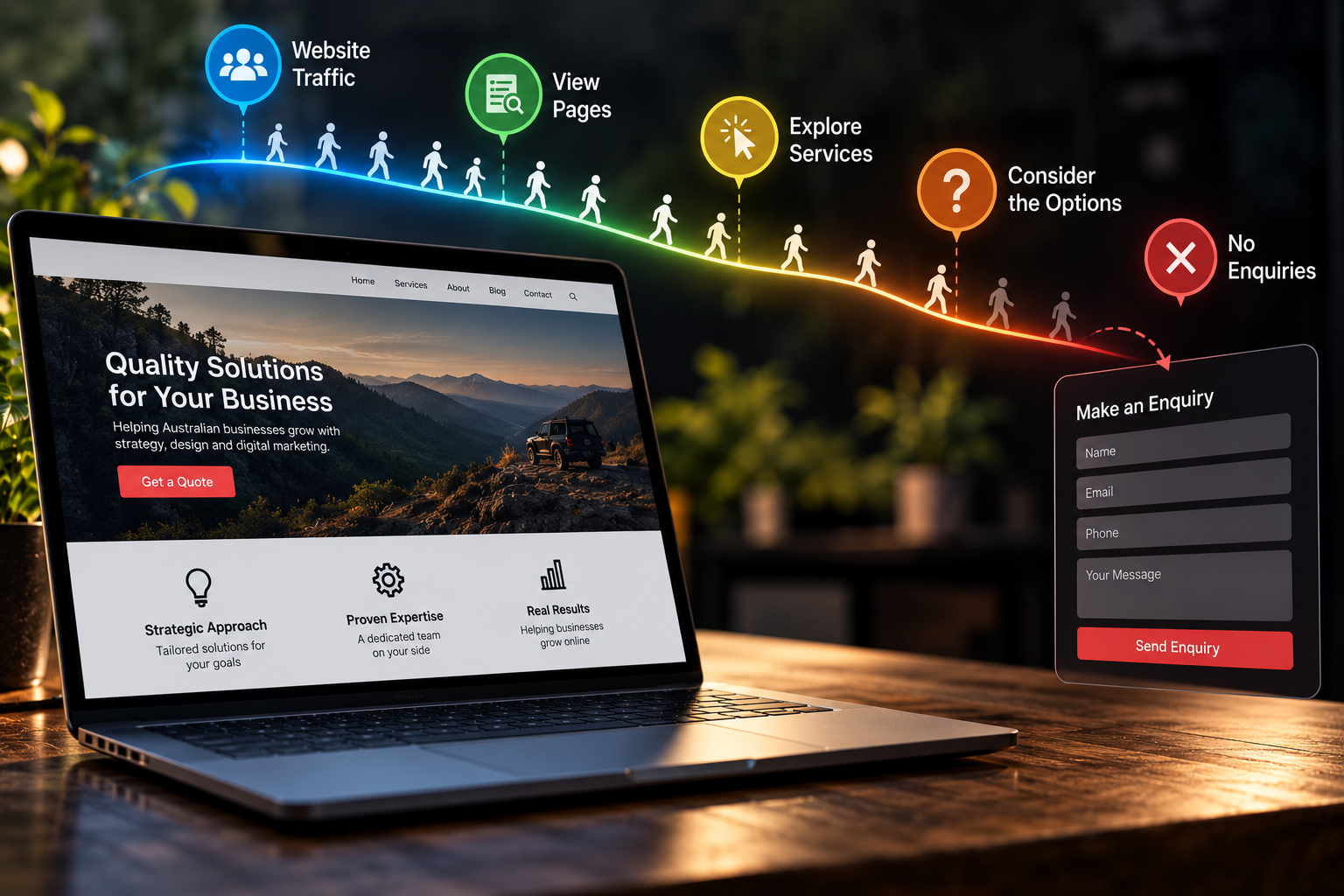
Why is my website getting traffic but no enquiries?
Those questions represent actual customer problems.
An effective content strategy should identify those problems and provide genuinely useful answers.
Google’s 2026 guidance specifically recommends creating unique, valuable and non-commodity content rather than simply reproducing information that can already be found everywhere else. Google for Developers
That means your content needs something more than generic definitions.
Add your experience.
Add examples.
Explain common mistakes.
Discuss trade-offs.
Answer the questions customers ask you during enquiries.
Show what happens in the real world.
That is where a considered Online Strategy becomes valuable. Instead of publishing content simply because “we need a blog this month”, each piece should have a defined audience, question and purpose.
3. Make Each Page Easy to Understand
Good content should also be well organised.
Imagine landing on a page containing 2,500 words with almost no headings, enormous paragraphs and no obvious answer to your question.
People struggle with that format, and it also makes the relationships between ideas less clear.
Use descriptive headings that tell readers what each section covers. Keep paragraphs manageable. Use lists where they genuinely improve comprehension. Add FAQs when they answer useful follow-up questions rather than simply repeating the page.
Your page might move logically through:
Problem → Explanation → Options → Recommendation criteria → FAQs → Next step
You are creating a page that can be understood quickly by a person while also providing clearly structured information for search systems.
Bing’s guidance for AI visibility similarly recommends clear headings, concise sections, useful tables and FAQ-style information where appropriate. Search – Microsoft Bing
4. Develop Topical Depth, Not Hundreds of Thin Articles
One mistake businesses can make with AI-assisted content creation is assuming that more content automatically means more visibility.
It doesn’t.
Publishing 100 superficial articles covering slightly different versions of the same keyword can create duplication and dilute the usefulness of your website.
A better approach is to build genuine subject depth.
For example, Big Boot Media’s core topic of SEO could naturally include content covering:
SEO Fundamentals
How search engines work, technical SEO, on-page optimisation and site structure.
Local Search
Local SEO, Google Business Profile optimisation, reviews and location visibility.
Content Strategy
Keyword research, search intent, content planning and internal linking.
AI Search
AI Overviews, AI Mode, AI citations and evolving search behaviour.
Measurement
Search Console, conversions, organic leads and SEO reporting.
Together, these resources establish a much clearer subject area than dozens of unrelated articles.
Internal linking then connects those resources back to your main Search Engine Optimisation service page.
5. Strengthen Your Brand Across the Web
Your website is central to your digital presence, but it isn’t the only place where information about your business exists.
Business profiles, directories, industry websites, social platforms, reviews and third-party mentions can all contribute to your wider online footprint.
This doesn’t mean trying to manufacture hundreds of mentions purely for AI systems. In fact, Google specifically warns against pursuing inauthentic mentions as an AI optimisation tactic. Google for Developers
Instead, concentrate on legitimate brand building.
Keep business information accurate. Build useful partnerships. Earn genuine reviews. Contribute expertise where appropriate. Publish content worth referencing.
Your Social Media activity can support this broader strategy too. Social media isn’t a substitute for SEO, but consistent messaging across your website and social channels can strengthen how people experience and recognise your brand.
6. Demonstrate Real Experience and Expertise
Generic content has become incredibly easy to produce.
That makes first-hand knowledge more valuable, not less.
If you are writing about Google Ads, don’t simply explain what Google Ads is.
Discuss:
- Common campaign mistakes you see
- What businesses should measure
- Why clicks don’t necessarily equal leads
- How landing pages affect campaign performance
- When paid search may or may not suit a business
- How campaign optimisation changes once conversion data becomes available
Then naturally direct readers who need professional assistance to your Paid Ads service.
The same principle applies across every industry.
A mechanic can provide actual maintenance insights.
A photographer can explain how different lighting conditions affect a session.
A professional services firm can explain its process and common client misconceptions.
An eCommerce business can publish detailed buying guides based on real customer questions.
AI can summarise widely available information very effectively. Your advantage lies in providing information that comes from actual experience.
7. Don’t Forget Images, Video and Other Content Formats
Search isn’t purely text based.
Google specifically recommends supporting textual content with useful images and videos where appropriate, particularly as search becomes increasingly multimodal. Google for Developers
That doesn’t mean adding stock photographs simply to break up paragraphs.
Visual content should contribute something.
For example:
Website design: before-and-after layouts, interface examples or page structure diagrams.
SEO: search performance charts or technical examples.
Paid advertising: anonymised campaign reporting examples.
Graphic design: actual creative work and brand applications.
Social media: campaign creative examples and content formats.
Your Graphic Design strategy therefore has a role beyond making pages look attractive. Strong visuals can communicate information that would otherwise require several paragraphs of explanation.
8. Use Structured Data Correctly, but Don’t Chase “AI Schema”
Structured data can help search engines understand eligible content and enable particular search features.
But it needs to accurately represent what users can see on the page.
More importantly, there isn’t a magic “AI schema” that guarantees your business will appear in an AI-generated response.
Google explicitly states that there is no special schema.org structured data required for AI Overviews or AI Mode. Google for Developers
So use appropriate structured data because it improves the machine-readable representation of your content, not because someone promises it will unlock AI rankings.
9. Make Sure AI Search Systems Can Access Your Website
Different platforms provide different controls.
For example, OpenAI documents separate web crawlers for different purposes. OAI-SearchBot relates to surfacing websites in ChatGPT search, while GPTBot relates to potential model training. Website owners can control them independently through robots.txt. OpenAI Developers
That distinction is useful.
A business could decide that it wants its website eligible to appear within ChatGPT search while applying a different preference to training-related crawling.
Don’t simply block unfamiliar crawlers without understanding what they do.
Review your:
robots.txt → CDN/security settings → WordPress security plugins → indexing settings → XML sitemap
An accidental block at any of these levels can undermine discoverability.
This should form part of ongoing Website Maintenance rather than something checked once when the website launches.
10. Internal Linking Matters More Than Many Businesses Realise
Internal links help visitors move naturally between related information.
They also help search engines discover pages and understand relationships between them. Google specifically includes making pages easy to find through internal links among its recommendations for AI-powered Search. Google for Developers
For example, an article discussing why businesses aren’t generating online leads could link naturally to:
Website Design when discussing conversion problems.
Search Engine Optimisation when discussing organic visibility.
Paid Ads when discussing immediate demand generation.
Social Media when discussing audience engagement.
Online Strategy when discussing the overall customer journey.
This creates a connected body of information instead of isolated pages competing independently.
11. Measure More Than Rankings
Traditional SEO reporting often focuses heavily on rankings.
Rankings still matter, but AI search requires a broader view of visibility.
Google introduced dedicated generative AI performance reporting in Search Console in 2026, providing website owners with additional insight into visibility in features such as AI Overviews and AI Mode. Microsoft also provides AI Performance reporting through Bing Webmaster Tools, including information about pages cited in AI-generated answers and associated grounding queries. Google for Developers
Businesses should therefore monitor a combination of:
Organic visibility
Are your important pages appearing for relevant searches?
AI visibility
Where available, is your content appearing within AI-powered search experiences?
Qualified traffic
Are the right people reaching your website?
Engagement
Are visitors actually reading and interacting with the content?
Conversions
Are visitors submitting enquiries, requesting quotes, purchasing or taking another meaningful action?
Ultimately, visibility has commercial value only when it contributes to business objectives.
What About llms.txt and Other AI SEO Tactics?
You’ll increasingly encounter new tactics claiming to be essential for AI visibility.
Treat those claims carefully.
Google’s current guidance says businesses do not need to create new machine-readable AI files or special markup to appear within its generative AI search features. Its 2026 optimisation guide specifically recommends focusing on established SEO practices rather than tactics such as unnecessary AI text files or artificial mentions. Google for Developers
That doesn’t mean the technical landscape will never change.
It means businesses shouldn’t abandon proven fundamentals every time a new AI optimisation trend appears.
A Practical AI Search Checklist for Businesses
Before worrying about advanced AI optimisation, ask:
- Can search engines crawl and index our important pages?
- Does every core service have a useful dedicated page?
- Does our content answer genuine customer questions?
- Are our pages internally linked logically?
- Do we demonstrate real experience rather than repeating generic information?
- Is our business information consistent and current?
- Does the website work properly on mobile?
- Are important pages fast and easy to navigate?
- Are images and videos genuinely useful?
- Are our important claims accurate and supportable?
- Are we measuring enquiries and conversions, not simply traffic?
- Have we reviewed how relevant search and AI crawlers can access the site?
If several answers are “no”, those fundamentals are a better place to invest your time than chasing the latest AI SEO trick.
SEO Is Becoming Broader, Not Obsolete
AI is changing how people search, but it isn’t making good SEO irrelevant.
Quite the opposite.
As search experiences become more sophisticated, businesses need websites that are technically accessible, clearly structured, genuinely useful and supported by a credible digital presence.
Google and Bing both continue to emphasise that established SEO foundations matter for their AI-powered experiences. Google for Developers
The opportunity is therefore not to optimise separately for every new AI platform that appears.
It is to build a digital presence that deserves to be found.
That means understanding what your customers are asking, creating genuinely useful answers, demonstrating experience, maintaining a technically sound website and connecting your content through a coherent digital strategy.
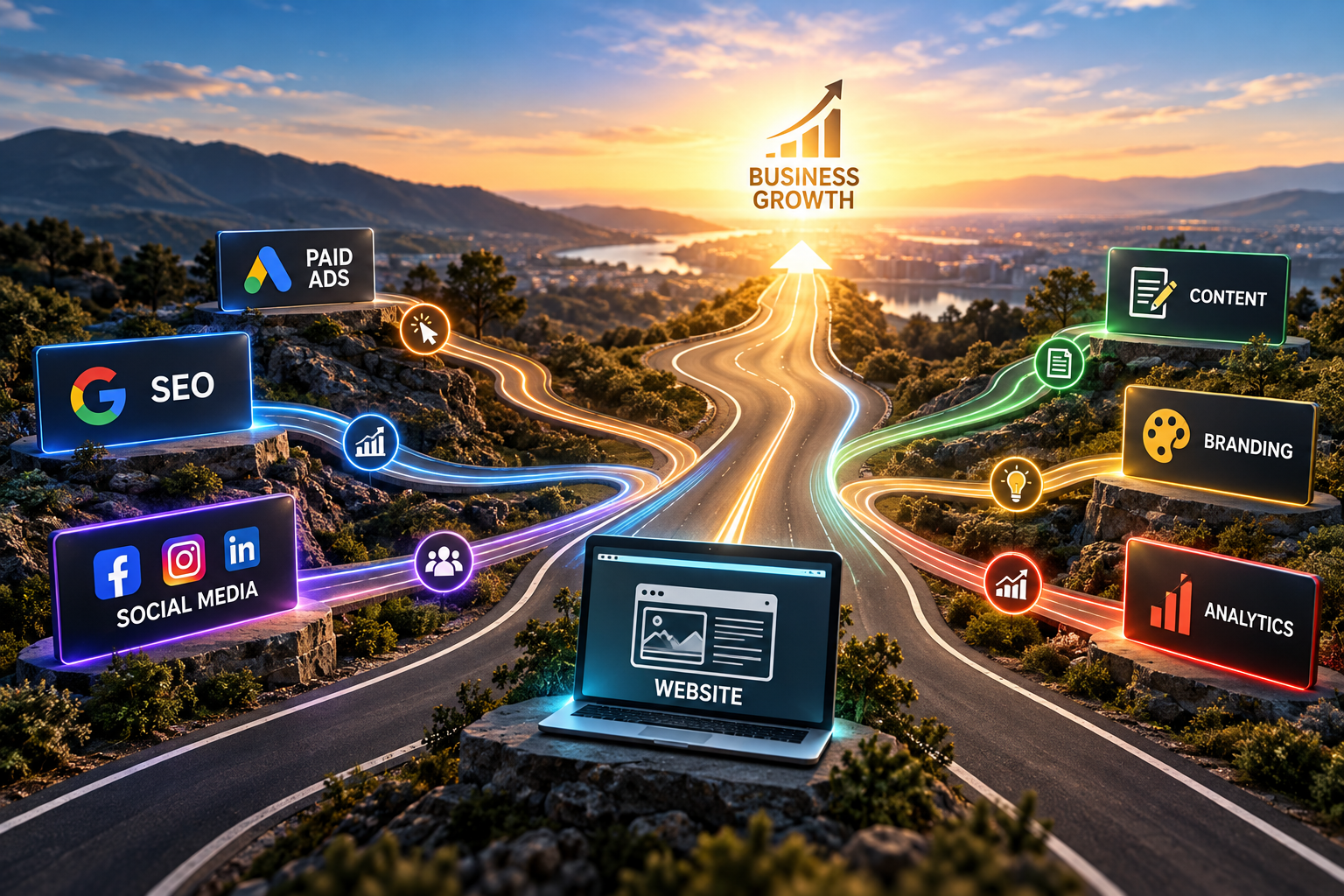
At Big Boot Media, we bring together website design, SEO, paid advertising, social media, graphic design and online strategy so that each part of your digital presence supports the others.
If your business is ready to improve its visibility across traditional search and the evolving AI search landscape, get a quote and tell us what you’re looking to achieve.