Digital marketing rarely fails because a business is doing absolutely nothing.
More often, the problem is that lots of things are happening, but they aren’t working together.
The website was redesigned by one supplier. Someone else manages Google Ads. SEO was started six months later. Social media has its own content calendar. Blog posts are written when someone has time. Analytics exists, but nobody regularly connects the data back to business enquiries.
Individually, each activity might look reasonable.
Together, however, they can create a fragmented customer journey that wastes budget, weakens your message and makes it difficult to understand what is actually generating results.
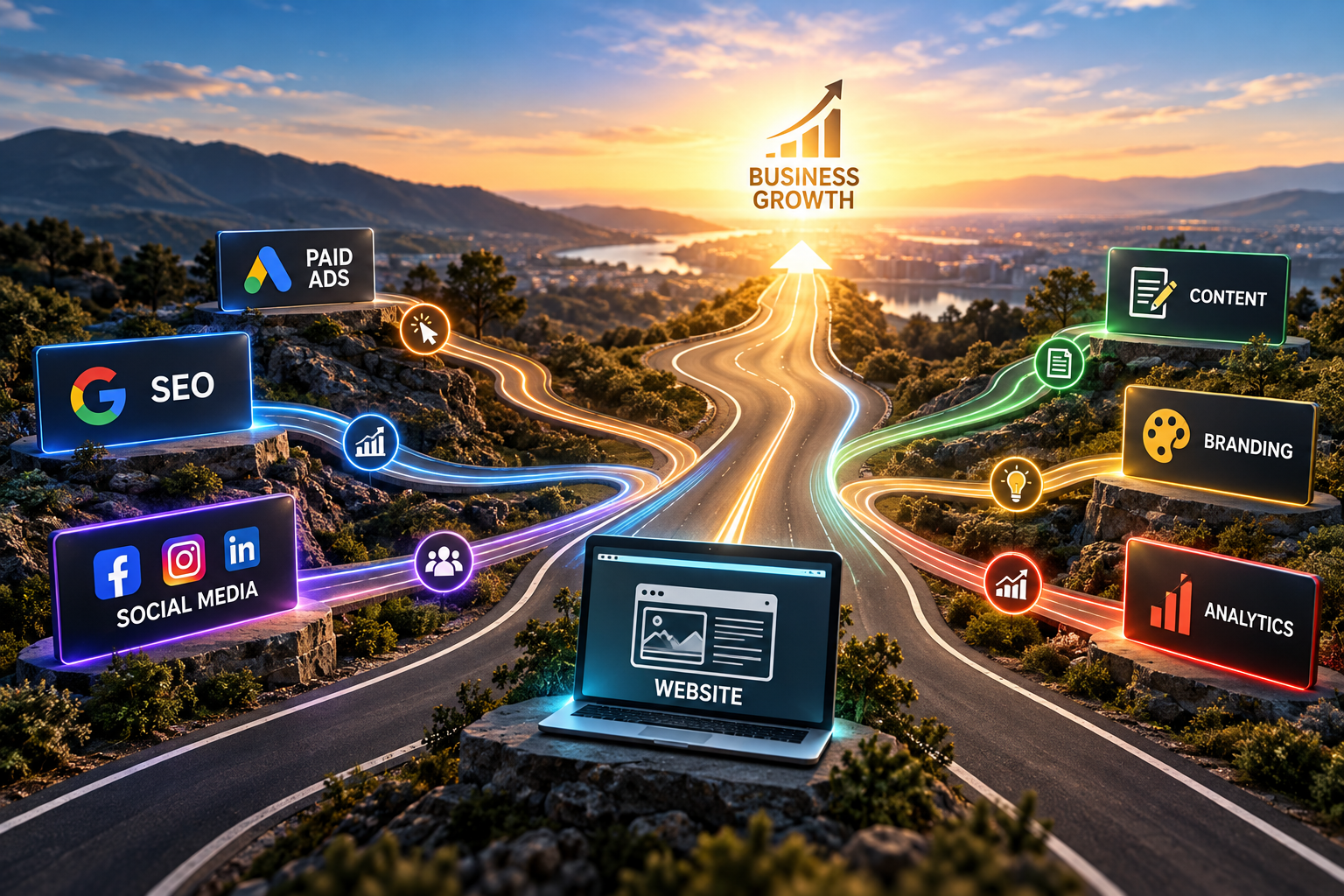
A stronger approach is to think of your website, SEO, paid advertising, social media, content and analytics as parts of one connected digital marketing system.
Here’s why that matters.
What Is an Integrated Digital Marketing Strategy?
An integrated digital marketing strategy connects your different online channels around common business objectives, audiences and messages.
It doesn’t mean publishing exactly the same thing everywhere.
Someone searching Google for a service is behaving differently from someone seeing your business for the first time on Instagram. A returning website visitor is at a different stage from someone reading an educational blog article.
Each channel has its own role.
The important part is that those roles support one another.
For example, your SEO strategy might bring someone to an educational article. That article introduces a relevant service and sends them to a service page. They later see your business on social media, return through a branded search and eventually submit an enquiry.
From the customer’s perspective, this is one journey.
From the business’s perspective, it might appear in analytics as several completely separate marketing channels.
That distinction is important.
The Problem With Treating Digital Marketing as Separate Activities
Businesses often organise marketing around channels.
SEO team.
Google Ads agency.
Social media manager.
Web developer.
Graphic designer.
Content writer.
There is nothing inherently wrong with using different specialists. The problem begins when each person is working towards a different objective or doesn’t know what everyone else is doing.
Your SEO team might be targeting one set of services while your advertising campaigns promote another.
Your social media messaging might position the business differently from the website.
Your web developer might remove an important SEO page during a redesign.
Your advertising manager might send expensive traffic to a page that was never designed to convert.
Your content writer might produce articles around topics that don’t support any commercial service.
Your analytics setup might then measure everything differently.
You end up with activity rather than strategy.
And activity can become expensive.
1. Your Website Should Be the Centre of the System
For many businesses, the website is where different marketing channels eventually meet.
Someone might arrive from:
Google organic search.
A paid advertisement.
Facebook or Instagram.
An email campaign.
A referral.
A blog article.
A Google Business Profile.
A direct recommendation.
Regardless of where they started, the website often becomes the place where they investigate your business, compare services, look for evidence of credibility and decide whether to make contact.
This means website design shouldn’t be treated purely as a visual exercise.
Your website needs to support the marketing channels sending people to it.
If you’re investing heavily in SEO, the site needs an appropriate information architecture, strong service pages, useful content and technically accessible pages.
If you’re running paid advertising, you need landing pages that closely match the advertisements and search intent.
If social media is important, visitors arriving from social platforms should immediately recognise the same business, messaging and value proposition.
A beautiful website that isn’t connected to the rest of your marketing can still underperform.
2. SEO Should Influence More Than Your Blog
SEO is sometimes treated as something that happens after a website has been built.
The website launches, and then somebody asks:
“Can we SEO it now?”
That approach can create unnecessary work.
Search considerations should influence website structure from the beginning.
Which services deserve dedicated pages?
How should information be organised?
What questions are potential customers searching for?
How should pages link together?
Which topics deserve supporting content?
What terminology does the audience actually use?
Big Boot Media’s existing guide to keyword research and content strategy discusses how understanding search intent and relevant keywords can help shape content around what an audience is actually looking for. That same thinking should extend beyond individual blog articles.
SEO insights can influence navigation, service pages, FAQs, landing pages and even advertising messages.
That’s where integration starts becoming valuable.
3. Paid Ads Shouldn’t Operate in Isolation
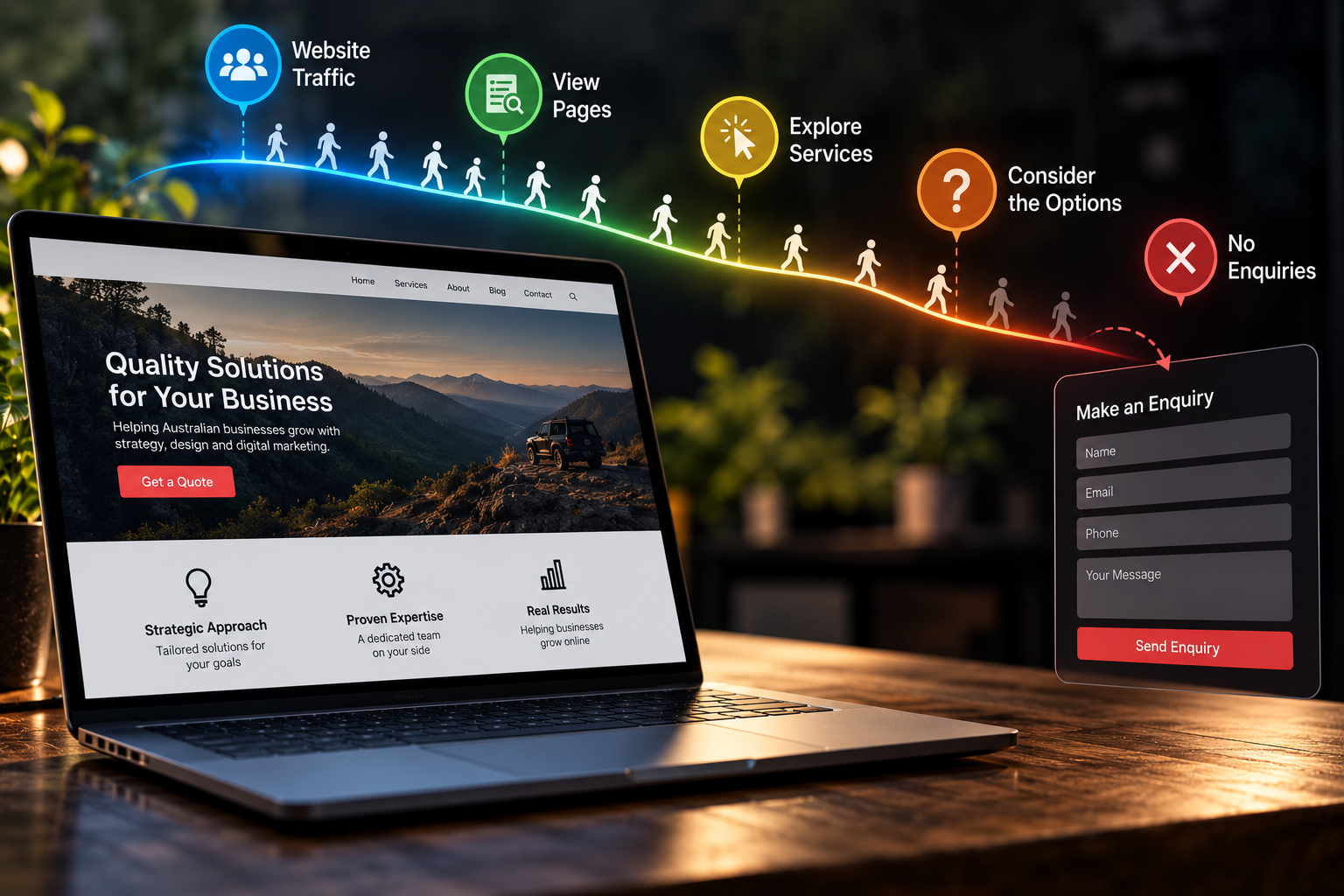
Paid advertising gives businesses the ability to reach relevant audiences relatively quickly, but buying traffic doesn’t solve problems elsewhere in the customer journey.
Suppose you’re running an advertisement for:
Website Design for Small Businesses
The advertisement performs well and generates clicks.
But visitors arrive on a generic digital marketing homepage where website design is one of six services.
Now they need to search for the information they expected to see.
Some will.
Others won’t.
A more connected approach considers the entire journey:
Search intent → Advertisement → Landing page → Supporting information → Call to action → Enquiry
The message should remain consistent throughout.
If the advertisement promises a particular solution, the landing page should immediately reinforce that solution.
If the landing page raises questions, the website should provide answers.
If visitors aren’t converting, the advertising campaign and website data should be examined together rather than each supplier assuming the other is responsible.
Big Boot Media’s existing digital marketing case studies include examples involving both organic search and Google Ads, illustrating how different acquisition approaches can be used depending on the business and its objectives.
The channel is only one part of the equation.
4. Social Media Should Support the Wider Customer Journey
Social media can easily become disconnected from everything else.
A business posts three times a week because someone decided that consistency is important.
Monday is a motivational quote.
Wednesday is a stock image.
Friday is a promotional graphic.
The account is active, but what is it actually contributing to the wider marketing strategy?
Social media becomes much more useful when it supports the same themes, services and campaigns being developed elsewhere.
Imagine you’ve published a detailed article answering an important customer question.
That article can become:
A social post highlighting the main problem.
A short video explaining one aspect.
A graphic showing an important takeaway.
A carousel covering several key points.
A discussion prompt.
A link back to the complete resource.
Now the website and social channels are reinforcing each other.
The same applies to visual identity. Consistency between your website, advertising and social presence helps visitors recognise that they’re interacting with the same business. Big Boot Media’s article on visual design for social media discusses the importance of maintaining a consistent visual identity across platforms.
Social media doesn’t need to copy your website.
It should feel connected to it.
5. Your Content Should Have a Purpose
Publishing blog posts can be valuable, but content shouldn’t exist simply because someone said businesses need blogs.
Every piece of content should have a reason to exist.
That reason might be to answer an important customer question, support a service, target a relevant search, explain a complicated subject, build credibility or help a potential customer move towards a decision.
Consider an article about:
How Long Does SEO Take?
Someone reading it may not be ready to request an SEO proposal immediately.
But the article can answer a genuine concern, demonstrate expertise and lead naturally towards your SEO services, related articles or case studies.
Big Boot Media already has content discussing how long organic marketing can take to produce results. Content like this becomes more valuable when it is connected to relevant commercial pages and other useful resources rather than existing as an isolated blog post.
This is also where internal linking becomes important.
A blog shouldn’t be a collection of dead ends.
Relevant articles should connect to other articles, service pages, case studies and conversion opportunities.
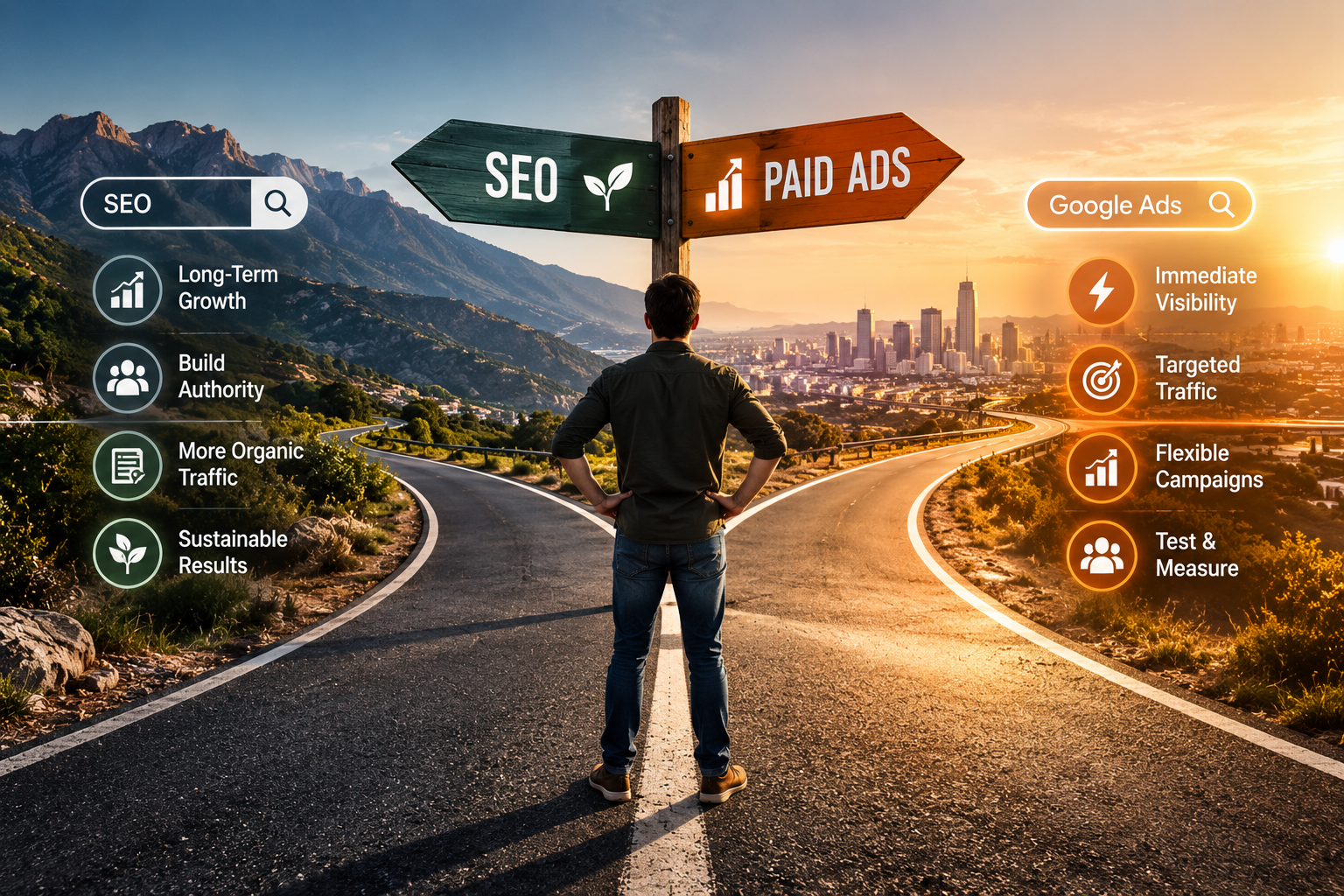
6. SEO and Paid Advertising Can Inform Each Other
SEO and paid advertising are often presented as competitors.
In practice, they can provide useful information to each other.
Paid search can help reveal which queries, messages and landing pages generate meaningful actions.
SEO research can identify topics, terminology and search behaviour that may also inform advertising campaigns.
Suppose paid advertising shows that visitors searching for one particular service convert considerably better than visitors searching for a broader term.
That insight may influence your SEO priorities.
You might strengthen the relevant service page, create supporting content and improve internal linking around that topic.
Likewise, SEO research may uncover commercially relevant search themes that haven’t yet been tested through advertising.
Rather than keeping the data in separate silos, each channel becomes a source of information for the other.
Our article on competitive keyword analysis and long tail keywords provides further context around matching search terms with different types of user intent.
7. Local Visibility Needs to Connect With the Website Too
For businesses serving particular geographic areas, local visibility is another piece of the system.
A Google Business Profile shouldn’t contain one version of your business information while your website communicates something different.
Services, contact information, branding and positioning should be consistent.
Your local profile can introduce someone to the business, but the website may ultimately need to answer the questions that determine whether they enquire.
Big Boot Media’s guide to its Google Business Profile approach covers areas such as profile information, optimisation, ongoing updates and performance measurement.
Again, the opportunity is greater when local visibility is treated as part of the broader digital presence rather than an isolated listing.
8. Your Branding and Messaging Need to Be Consistent
Imagine encountering a company through an advertisement that says:
Premium Digital Solutions for Growing Businesses
You click through to a website that positions the company as:
Affordable Marketing for Everyone
Then you visit its social media profile and find:
Creative Content for Lifestyle Brands
Which one is the real business?
Even if each message sounds acceptable independently, together they create uncertainty.
Integrated marketing requires a consistent core message.
That doesn’t mean repeating exactly the same headline everywhere.
Your tone and format can change according to the platform.
The underlying positioning should remain recognisable.
Customers should gradually build a clearer understanding of your business each time they interact with it, rather than receiving a different story on every channel.
9. Conversion Tracking Needs to Connect Everything
This is where many disconnected strategies become particularly difficult to manage.
Imagine the following customer journey.
Someone discovers your business through an organic Google search.
They read an article but don’t enquire.
A week later they see a social media post.
Later they search your brand name.
They visit a service page.
Finally, they return through a paid remarketing campaign and submit an enquiry.
Which channel generated the lead?
There isn’t always a simple answer.
The advertisement may receive the final conversion attribution, but SEO and social media contributed to the journey.
This is why businesses should be careful about making decisions based only on the last interaction before an enquiry.
Measurement should help you understand both conversions and the wider journey leading to them.
You should know which landing pages attract visitors, which sources generate meaningful engagement, which calls to action are used and which forms or actions result in genuine enquiries.
Most importantly, everyone involved in your marketing should be working from compatible definitions.
If the advertising team considers a button click a conversion while the business considers only a completed enquiry a lead, performance discussions quickly become confusing.
10. Disconnected Marketing Can Waste Budget Without Looking Broken
This is perhaps the biggest problem.
Disconnected marketing doesn’t always produce an obvious error message.
Your website still works.
Ads still generate clicks.
SEO still generates impressions.
Social posts still receive engagement.
Analytics still produces reports.
Everything appears active.
Yet the business may be spending money inefficiently because the individual parts aren’t supporting one another.
Consider a company spending more on advertising because enquiries are low.
The advertising team increases traffic.
But the actual problem is the landing page.
More advertising simply sends more visitors to the same poor experience.
Or consider a business publishing dozens of SEO articles while its core service pages remain weak.
Traffic increases, but enquiries don’t.
The problem isn’t necessarily SEO.
The problem is the connection between information and commercial intent.
This is the hidden cost of fragmentation.
You don’t only lose money through obviously unsuccessful campaigns. You can lose it through successful individual metrics that don’t contribute enough to the overall business objective.
What Connected Digital Marketing Looks Like
A connected strategy starts with the business rather than individual marketing channels.
Suppose the objective is to generate more qualified enquiries for a particular service.
Your website clearly explains that service and provides a straightforward enquiry path.
SEO targets relevant commercial searches while supporting content answers questions people ask before purchasing.
Paid advertising targets high intent audiences and directs them to relevant landing pages.
Social media reinforces the expertise, content and messages behind the campaign.
Graphic design creates a consistent visual identity across those touchpoints.
Analytics measures what happens from initial visit through to enquiry.
Now every activity has a role.
That doesn’t mean every channel needs the same budget or attention.
Some businesses may rely heavily on organic search.
Others may generate most opportunities through paid campaigns.
Some may benefit greatly from social media, while for others it plays a supporting role.
Integration isn’t about giving every channel equal importance.
It’s about ensuring the channels you use are moving in the same direction.
Start With the Customer, Not the Marketing Channel
One of the simplest ways to improve digital strategy is to stop asking:
“What should we post on social media?”
or:
“Which keywords should we rank for?”
or:
“How much should we spend on Google Ads?”
Those questions matter, but they come later.
Start with:
Who are we trying to reach?
What problem are they trying to solve?
What questions do they have before choosing a provider?
Where are they likely to encounter us?
What information will they need next?
What could stop them from enquiring?
What action do we ultimately want them to take?
Once those answers are clearer, the role of each marketing channel becomes easier to define.
Audit the Connections, Not Just the Channels
If you’re already investing in several areas of digital marketing, you don’t necessarily need another platform or another campaign.
You may need to improve the connections between what you already have.
Look at the journey from the customer’s perspective.
Search for one of your main services and review the page they are likely to find.
Look at your advertisements and compare their promises with the pages they link to.
Visit your social profiles and then your website. Does it feel like the same business?
Read several blog articles. Is there an obvious path from useful information to relevant services?
Submit your enquiry form on a mobile phone. Does it work properly?
Check your analytics. Can you confidently identify meaningful enquiries rather than simply clicks and page views?
Review your SEO priorities. Do they align with the services the business actually wants to grow?
These connections are often where the biggest opportunities are hiding.
One Strategy, Multiple Channels
Your customers don’t think in terms of marketing departments.
They don’t care whether your SEO agency created one page and your advertising agency created another.
They simply experience your business.
Every search result, advertisement, social post, website page, article and enquiry form contributes to that experience.
The stronger those connections are, the easier it becomes for someone to understand your business, trust what you’re offering and take the next step.
An integrated digital marketing strategy doesn’t mean being everywhere.
It means making sure the places where you are present work together.
At Big Boot Media, that is the thinking behind bringing website design, search marketing, paid advertising, social media, creative and digital strategy together. Instead of viewing each service as an isolated activity, the objective is to understand how each one contributes to the wider customer journey.
You can also see examples of how different digital approaches have been applied in Big Boot Media’s case studies.
If your business is already investing in several digital channels but the results feel disconnected, the first step may not be spending more. It may be getting your existing website, marketing and measurement working towards the same objective.
Talk to Big Boot Media about your digital strategy
Frequently Asked Questions
What is integrated digital marketing?
Integrated digital marketing means coordinating different channels such as your website, SEO, paid advertising, social media, content and analytics around shared business objectives. Each channel can perform a different role while contributing to the same customer journey.
Does a business need to use every digital marketing channel?
No. A connected strategy isn’t about being active on every available platform. The appropriate mix depends on your customers, objectives, market, resources and budget. It is generally more useful to choose relevant channels and connect them effectively than to maintain a weak presence everywhere.
How do SEO and paid advertising work together?
SEO can develop organic visibility and useful website content, while paid advertising can provide targeted paid exposure. Information from keyword research, landing page performance and conversion data can also help inform decisions across both channels.
Should social media drive people to my website?
Not every social post needs to contain a website link. Social media can also build awareness, reinforce expertise and maintain relationships. However, where the objective is an enquiry, purchase or detailed consideration of a service, the website will often play an important part in the journey.
Why am I getting traffic but not enough enquiries?
Traffic alone doesn’t guarantee conversions. Problems can occur because of irrelevant traffic, weak landing pages, unclear messaging, poor mobile usability, insufficient trust, difficult enquiry forms or mismatched calls to action. The entire journey should be reviewed rather than focusing only on visitor numbers.
How can I tell whether my digital marketing channels are working together?
Start by reviewing the journey from initial discovery to conversion. Check whether your messaging is consistent, advertisements lead to relevant pages, SEO content supports your services, social activity reinforces wider campaigns and analytics accurately records meaningful conversions.